



9 best AI training platforms in 2026

AI training is changing the way organizations develop teams — for the better. So which are the best AI training solutions on the market today in 2026?

Published
March 2, 2026
by
UneeQ Staff
Updated
August 25, 2026
9 best AI training platforms in 2026
Table of Contents
This is some text inside of a div block.

AI and human skills often seem at odds with each other. The focus in 2026 (correctly or incorrectly) is on whether AI will take people's jobs, replacing them en masse in the largest feat of automation the world has ever seen. But what about when AI is used to make human skills stronger? That's the focus of AI training; and learning and development teams are taking note.

The immersive learning market is projected to grow from $16.4 billion in 2024 to nearly $70 billion by 2030 – a 28.3% CAGR that signals a fundamental shift in how enterprises train their people. Among the most immersive and impactful types of learning is AI training. Through AI training, organizations allow their teams to interact with AI as a means to roleplay important conversations with real people, sharpening their skills and building their instincts for the real thing.

For chief learning officers and L&D executives evaluating platforms, AI training sounds very promising — and perhaps a little confusing.

This guide compares the leading AI training platforms in 2026, examining their strengths, limitations, pricing models, and ideal use cases. Whether you're training sales teams, developing leaders, or preparing customer service reps for high-stakes conversations, you'll find a platform that fits your needs.

What is an AI training platform?

Humans train AI, but did you know AI also trains people? And it's not as dystopian as you first think.

Take sales training, for instance. In sales, 75% of reps prefer to learn on actual sales calls. For sales managers and leaders, this is far from ideal, as hard-won leads are essentially sacrificed so reps can 'learn by doing' and (hopefully) learn from their mistakes.

So sales leaders roleplay with their teams, regularly sitting down with sales reps and pretending to be on a call so they can provide better coaching. This doesn't scale, and even modest-size sales teams quickly find themselves under-trained.

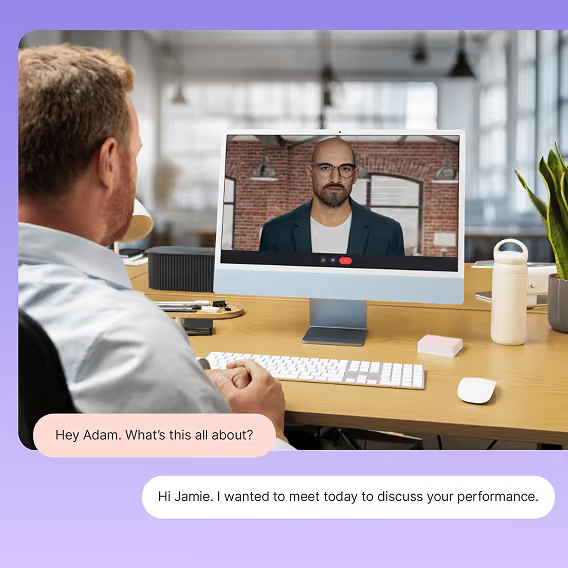
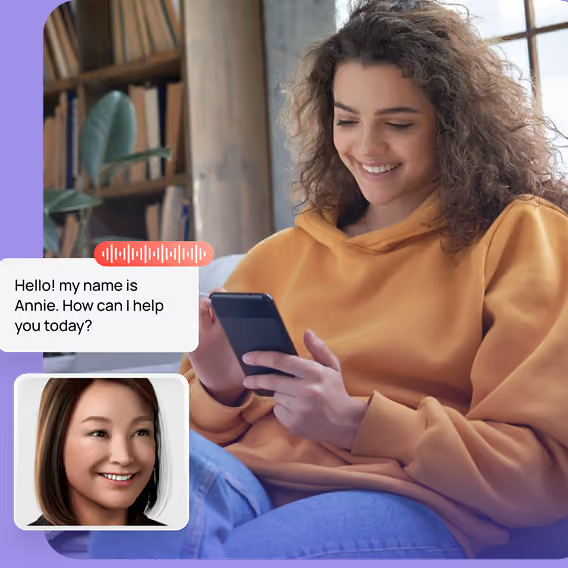
Instead, AI sales training gives reps a safe space to practice. The AI simulates a real buyer, asking the questions buyers usually ask, all in a realistic environment that puts sales reps to the test.

The same solutions exist in customer service training, education, leadership development, healthcare, and virtually any other scenario where immersive practice can improve people's skills.

What makes immersive learning and AI training different?

Before diving into the platforms, it's worth understanding what separates truly immersive learning from traditional e-learning.

Immersive learning creates psychologically safe environments where employees can practice high-stakes conversations and skills without real-world consequences. The best platforms combine AI-driven interactivity, realistic scenarios, and meaningful feedback to create practice experiences that actually stick.

Research from PwC found that learners in immersive training were 4x faster to train than in the classroom and 275% more confident in applying what they learned. Meanwhile, studies show traditional e-learning suffers from completion rates as low as 20-30% and knowledge loss of up to 90% within one month.

The platforms below represent different approaches to solving the same problem: how do you build skills that require practice, not just information?

Before we get started, you'll see these solutions can be broadly categorized by the type of roleplay they offer. Some are voice-only, providing realistic training for professionals who spend their time on the phone; while others use avatars or digital humans to provide a more immersive and complete training scenarios, simulating nuances like expressions, body movements, and gestures — designed for professionals who interact face-to-face via video call or in person.

So, without further ado, let's dig into the NINE BEST AI training platforms in our 2026 review guide.

UneeQ Immersive Training Platform AI Training review 2026

1. UneeQ Immersive Training Platform

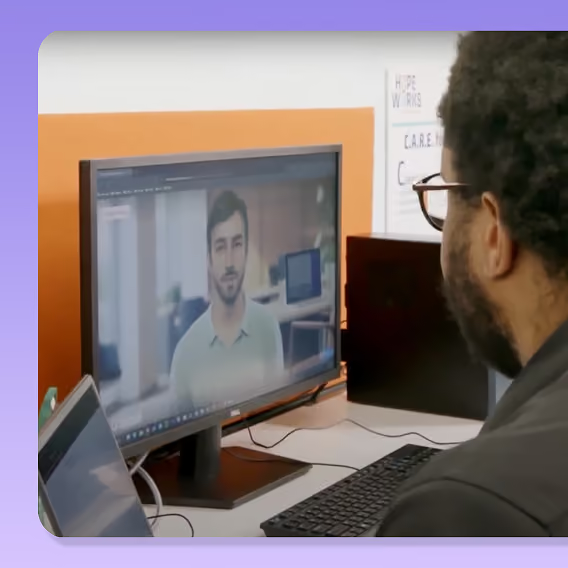
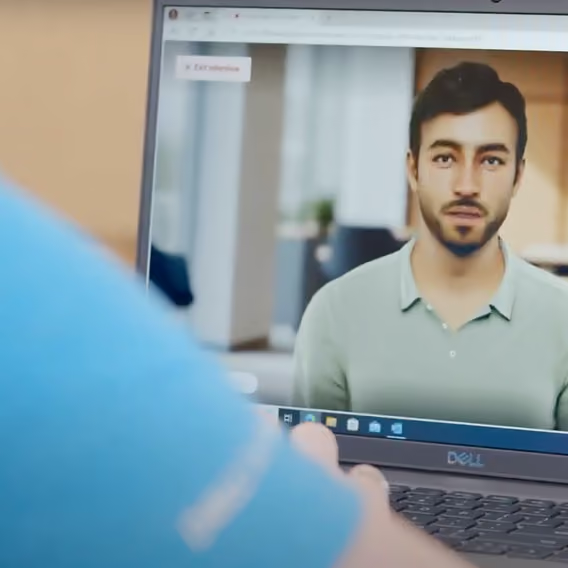
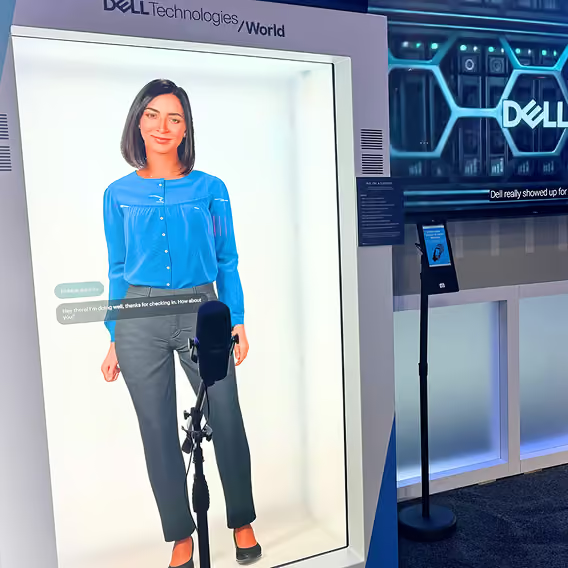
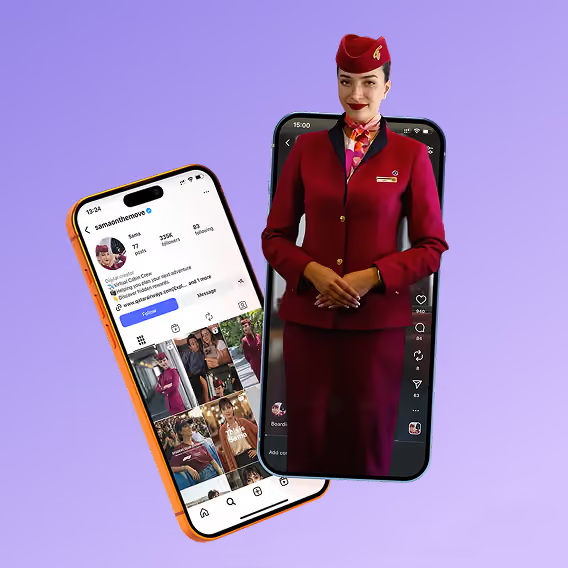
UneeQ's Immersive Training Platform is AI roleplay built around emotionally intelligent digital humans — practice partners your people can see, read, and react to in real time. It covers sales, customer service, leadership development, and education organizations. Under the hood sits UneeQ's Digital Human OS: Synanim™ animation for lifelike expression and LLM orchestration for conversations that don't fall apart when someone goes off-script. Most AI training tools give your reps a voice in their headphones. This one gives them a person to face.

Best for: enterprise teams who want their people to practice reading a room, not just reciting a pitch.

Key features

  • Digital humans that react like people. UneeQ's proprietary Synanim™ animation drives micro-expressions, natural gestures, and full-body presence — a practice partner who folds their arms, glances away, or leans in. Responses land fast enough that nobody's waiting for the AI to catch up, which is what keeps a roleplay feeling like a conversation instead of a form.
  • Face-to-face roleplay, not voice-only. Body language, eye contact, and emotional cues carry a huge share of any tough conversation. Voice-only tools skip that half entirely. Practicing with a face you can read is the closest thing to the real deal short of putting a real customer at risk.
  • AI Buddy coaching. The moment a roleplay ends, a digital human coach talks the learner through it — out loud, face to face. AI Buddy pulls from the transcript, the learner's scores, and your organization's own coaching framework, so feedback matches how you actually coach. No waiting for a manager to find a slot next Thursday. More on how AI Buddy works.
  • 3D Analytics. Human skills have always been the hard ones to measure. 3D Analytics scores what happened in the conversation and shows where each person is strong, where they're shaky, and where a manager should spend their coaching time. Team readiness stops being a hunch.
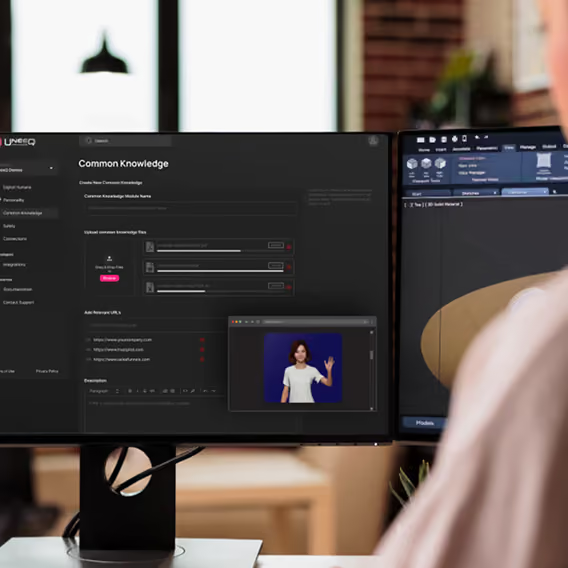
  • Create scenarios in minutes, not months. Build practice around your own ICPs, methodology, objections, and tone. New product launch on Monday? Your scenarios can be live before the coffee's cold.
  • One platform, many domains. Sales, customer service, leadership, onboarding, and compliance practice all run on the same system — so you're not buying and babysitting a different vendor for every department.
  • Enterprise-ready by design. Built for high customizability into enterprise software environments, so it fits the stack you already run rather than asking IT to build around it.
  • Straightforward pricing. Per seat, per month, with every feature and integration included as standard. No feature tiers, no "contact us for the good stuff."

Pricing

UneeQ has custom enterprise pricing based on deployment scope and user volume. UneeQ focuses on mid-to-large enterprises who have substantial training needs. You can start a 30-day free trial here.

Best for

Organizations that need effective and realistic practice environments for complex, emotionally charged conversations—sales meetings, difficult in-person customer interactions, performance reviews, career interview training, and leadership coaching. Particularly strong for enterprises that value visual presence and emotional intelligence in their training, as well as those who need robust AI coaching capabilities and deep training analytics.

Limitations

  • Enterprise positioning means it's not designed for small teams.
  • Similarly, there is no individual plan.
  • Not ideal for organizations and teams that primarily interact over the phone (telesales or call centers).
Mursion AI training review for 2026

2. Mursion

Mursion is a simulation platform that pioneered the "human-in-the-loop" approach—blending AI technology with live human simulation specialists to create highly realistic interpersonal training scenarios.

Key features

  • Hybrid AI + human simulations: Mursion's distinctive model uses trained human "interactors" to control avatar behavior in real time, creating remarkably responsive and improvisational conversations.
  • On-demand AI scenarios: For 24/7 access, Mursion now offers fully AI-driven simulations that complement their live sessions.
  • Extensive scenario library: Pre-built modules cover leadership development, DEI conversations, customer service, and sales — with customization options available.
  • Face-to-face simulation: Akin to UneeQ, Mursion uses digital humans characters to simulate in-person interaction.

Pricing

Enterprise pricing requires consultation. Industry estimates suggest approximately $49 per 30-minute session, with costs ranging from $134-$164 per person for longer training modules. The human-powered model makes Mursion a premium investment.

Best for

Large enterprises that prioritize realism for sensitive interpersonal scenarios like DEI training, difficult feedback conversations, and customer de-escalation. Organizations willing to invest in high-touch, high-quality simulations.

Limitations

  • Low-fidelity digital humans impact realism and user immersion.
  • Premium pricing can add up quickly for large-scale deployments.
  • Human simulation specialists require scheduling, limiting on-demand availability.
  • The dependency on live interactors makes scaling more complex than fully automated solutions
Hyperbound AI training review 2026

3. Hyperbound

Hyperbound is an AI-powered sales roleplay platform that specializes in helping sales teams practice cold calls, discovery conversations, and objection handling with realistic AI buyers.

Key features

  • Rapid AI buyer creation: Build customized buyer personas based on your ICP in under 10 minutes.
  • Multi-language support: Practice in 25+ languages, including English, Spanish, French, German, Mandarin, Japanese, and more.
  • Conversational intelligence integration: Beyond roleplay, Hyperbound analyzes real sales calls to identify what top performers do differently.
  • Gamification and leaderboards: Scoring systems and competitive elements help to drive engagement among sales reps.
  • Instant AI coaching: Methodology-aligned feedback immediately after each session.

Pricing

Custom pricing based on team size and feature requirements. Hyperbound targets mid-market to enterprise B2B sales organizations and offers free trial demos.

Best for

B2B sales teams—particularly SDR and AE organizations—that need high-volume practice for cold calling, discovery, and objection handling. Companies using sales methodologies like SPIN, MEDDIC, or Challenger will appreciate the customizable scorecard alignment.

Limitations

  • Voice-focused interactions without face-to-face sales roleplay.
  • Primarily designed for sales use cases, not broader L&D needs.
  • Some users report scenarios can feel repetitive over extended use.
Second Nature AI training 2026

4. Second Nature

Second Nature positions itself as an "always-available sales coach" — a conversational AI platform that lets sales reps practice pitches and product presentations with a virtual customer persona.

Key features

  • AI conversation partner: The platform's virtual persona (often called "Jenny") engages in natural back-and-forth dialogue, asking questions, raising objections, and adapting to the rep's approach.
  • Detailed performance scoring: Evaluates messaging coverage, speaking rate, filler words, answer length, and objection handling.
  • Custom scenario creation: Upload your sales scripts, product information, and playbooks to create training aligned with your specific sales motion.
  • LMS integration: Works with Workday, Adobe Learning Manager, Cornerstone, and others via SCORM and LTI.
  • Manager dashboards: Track team performance, identify coaching opportunities, and monitor readiness before critical conversations.

Pricing

Custom pricing requiring demo and consultation. Industry reports suggest approximately $30-40 per user per month for mid-market teams, with enterprise contracts negotiated for volume discounts.

Best for

Sales organizations focused on pitch perfection, product knowledge certification, and onboarding acceleration. Particularly valuable for companies with complex products requiring consistent messaging across sales teams.
Limitations

  • Generative AI avatars are low quality offering little realism for in-person AI sales training.
  • Some users report the AI can feel "robotic" until you adjust to the format.
  • Limited language support compared to some competitors.

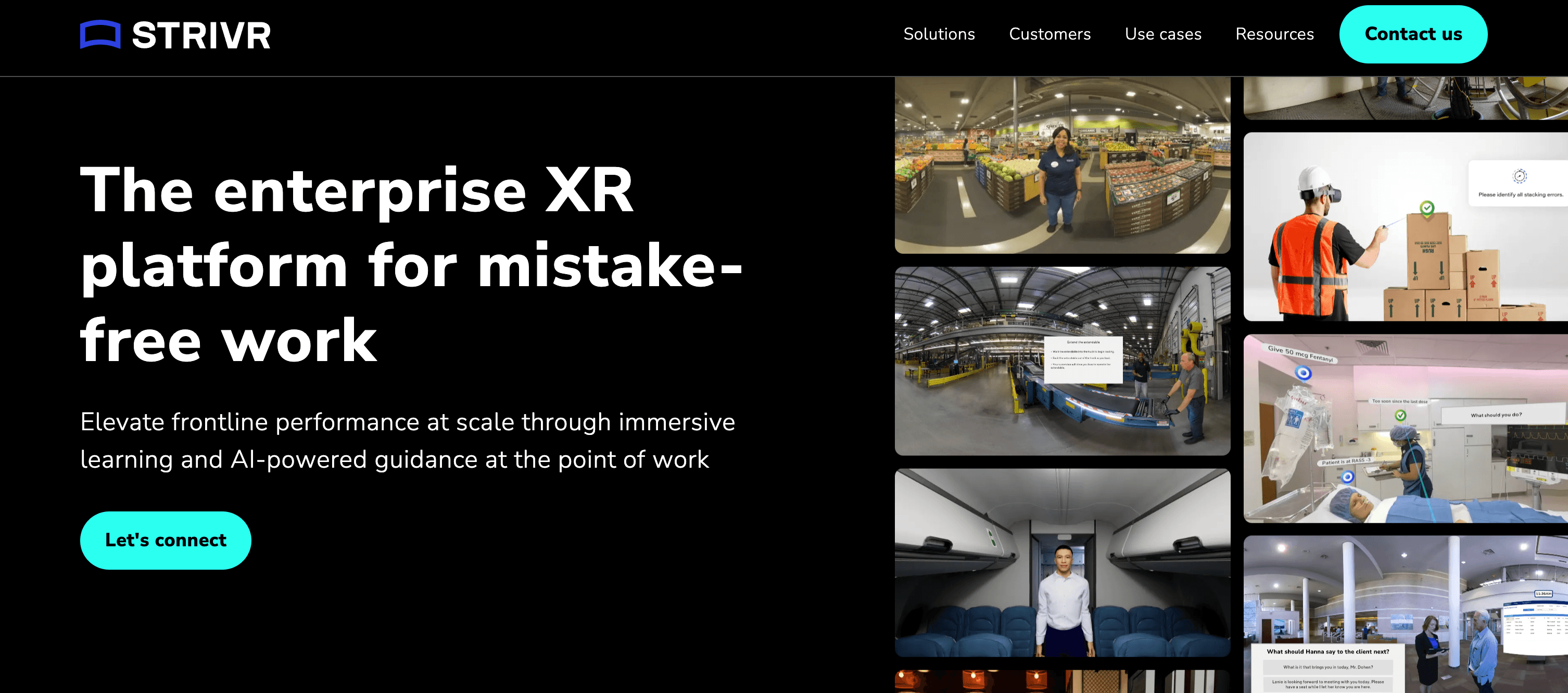
5. Strivr

Strivr is an enterprise VR training platform that delivers immersive experiences through 360° video and interactive simulations. Originally founded for sports training (they helped NFL quarterbacks improve decision-making), Strivr has become a major player in corporate VR training.

Key features

  • Full VR immersion: Training delivered through dedicated VR headsets (Meta Quest, HTC Vive, Apple Vision Pro) for maximum presence and engagement.
  • Walmart-scale deployment: Proven at massive scale—Strivr has deployed over 17,000 headsets across Walmart's 4,700+ locations, delivering millions of training sessions.
  • 360° video production: Strivr Studios creates custom live-action training content filmed in real environments for maximum authenticity.
  • Patented analytics: Behavioral data collection tracks where learners look, how they respond, and how quickly they make decisions.
  • Operational and safety focus: Strong track record in operational procedures, safety training, etc.

Pricing

Enterprise pricing with custom quotes. Industry estimates suggest $40,000-$50,000+ for custom VR experiences. The investment includes content production, platform licensing, and device management.

Best for

Large enterprises with distributed frontline workforces—retail, logistics, manufacturing, hospitality—that need VR-specific training at scale. Organizations with dedicated training budgets, staff resources, and infrastructure for VR hardware deployment.

Limitations

  • Significant upfront investment in VR hardware and content production.
  • Not designed for conversational practice; better suited for procedural and observational training.
  • Scaling requires physical headset distribution and management
Virti AI training review for 2026

6. Virti

Virti is a learning platform that combines digital humans with interactive video scenarios, initially gaining recognition for healthcare simulation before expanding into broader enterprise applications.

Key features

  • No-code scenario builder: Create custom training experiences including branching video scenarios, 360° content, and AI roleplay without technical expertise.
  • Face-to-face roleplay: Like UneeQ, Virti's platform engages learners in dynamic in-person conversations with AI-driven characters that respond to inputs.
  • Cross-platform delivery: Training works across VR headsets and desktop browsers for flexible access.
  • Healthcare heritage: Strong roots in clinical simulation with applications in patient communication, clinical reasoning, and medical procedure training.
  • Accessible pricing: Entry plans starting at $99/month for small teams.

Pricing

Subscription plans from $99/month (Starter) to $199/month (Pro), with enterprise options for larger deployments. 14-day free trial available (at time of writing).

Best for

Small to mid-sized businesses looking for affordable, versatile immersive training with both video and AI conversation capabilities.

Limitations

  • AI avatar sophistication doesn't match dedicated digital human platforms, affecting the level of realism the platform is able to recreate.
  • Video scenario creation still requires content production investment.
  • Enterprise features require higher-tier plans.
Cornerstone Talespin AI training review 2026

7. Talespin

Talespin is an enterprise XR platform that uses virtual reality to deliver soft skills training, particularly for leadership development and interpersonal communication.

Key features

  • AI-driven virtual characters: Interactive avatars that can hear and respond to learner behavior in real time.
  • No-code authoring (Talespin Studio): Build custom VR scenarios without programming knowledge.
  • Off-the-shelf content library: Ready-made modules covering feedback delivery, inclusive leadership, coaching, and more.
  • Cornerstone partnership: Strategic relationship with Cornerstone OnDemand enhances enterprise LMS integration.
  • Skills insights and analytics: Performance data helps identify skill gaps and measure training ROI.

Pricing

Enterprise pricing with custom quotes based on licensing, content access, and implementation scope. Positioned as a premium enterprise solution.

BestfFor

Large enterprises prioritizing leadership development, DEI training, and interpersonal skills at scale using XR —particularly those already invested in the Cornerstone ecosystem.

Limitations

  • VR/XR-first approach requires headset investment, content management, and hardware distribution.
  • Premium pricing may exceed smaller organizations' budgets.
  • Content customization reportedly requires engagement with Talespin's services team.
Bodyswaps AI training review 2026

8. Bodyswaps

Bodyswaps is a VR soft skills training platform with a unique "perspective swap" feature that lets learners see themselves from another person's viewpoint after practicing a scenario. Bodyswaps positions itself as a VR soft skills training solution for students in particular.

Key features

  • Perspective swap technology: After completing a scenario—like a job interview or giving feedback—learners can replay it from the other character's perspective, literally seeing themselves through someone else's eyes.
  • Ready-made training library: Modules covering job interviews, public speaking, active listening, conflict resolution, and inclusive leadership.
  • Multi-platform access: Works on VR headsets and standard computers for broader accessibility.
  • LMS integration: Connects with existing learning management systems for enterprise deployment.
  • Education focus: Strong presence in universities and career development programs.

Pricing

Custom pricing based on institution or company requirements. Quote calculator available on their website.

Best for

Higher education institutions, graduate programs, and corporate L&D teams focused on career readiness and fundamental communication skills—particularly for younger or emerging professionals.
Limitations

  • Relatively narrow focus on foundational soft skills;
  • VR hardware still required for full immersive experience;
  • Less customization flexibility compared to enterprise-focused platforms.

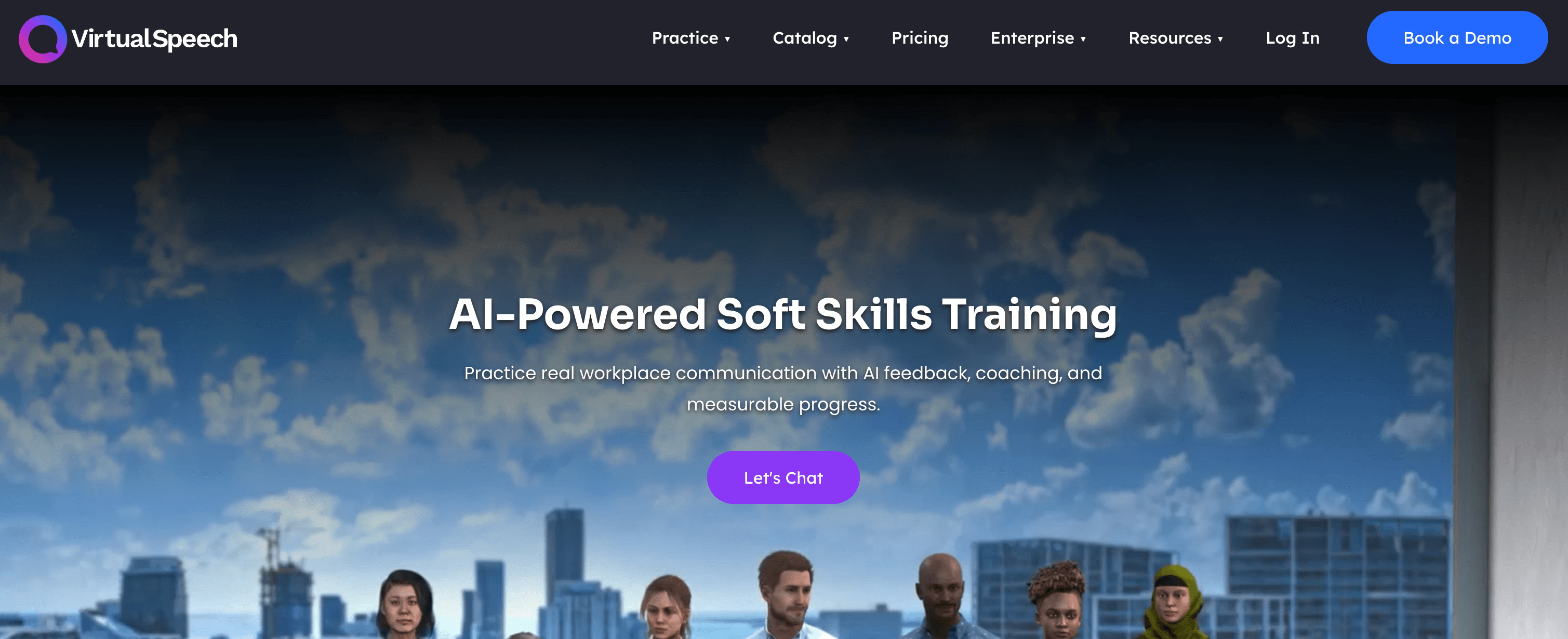
9. VirtualSpeech

VirtualSpeech focuses specifically on communication skills training—public speaking, presentations, and professional conversation—using VR environments and AI-powered feedback.

Key features

  • 40+ VR scenarios: Practice in virtual auditoriums, boardrooms, networking events, and interview rooms.
  • Real-time speech analysis: AI evaluates eye contact, filler words, speaking pace, and vocal variety.
  • Web and VR delivery: Use full VR for maximum immersion or web browser for accessibility.
  • Structured learning paths: Courses combine theory with practice, with digital certificates upon completion.
  • Individual-friendly pricing: Accessible subscription plans for professionals and smaller teams.

Pricing

Individual subscriptions at $45/month or $399/year. Enterprise plans with custom pricing available.

Best for

Individual professionals working on presentation skills, executives preparing for high-stakes speaking engagements, and organizations with focused public speaking development needs.

Limitations

  • Digital humans offer in-person roleplay but of limited quality.
  • Narrowly focused on presentation and speaking skills.
  • Less suitable for conversational roleplay or complex interpersonal scenarios.
  • AI feedback focuses on delivery metrics rather than content or strategy.

AI training platform comparison at a glance (2026)

Platform comparison

Immersive learning platforms, side by side

Nine platforms buyers shortlist for human skills training in 2026 — what each one is best at, how you talk to it, what it costs, and who it suits.

Platform Primary strength Interaction type Starting price Best industry fit
UneeQ Immersive Training Platform Digital human leader Full-body, emotionally intelligent digital humans with Synanim™ animation, plus AI Buddy coaching and 3D Analytics Face-to-face visual Per seat, per month Every feature and integration included
Sales Customer service Leadership
Mursion Human in the loop Hybrid AI plus live human simulation specialists Avatar + live specialist ~$49 per 30-min session Enterprise pricing
DEI Leadership Enterprise L&D
Hyperbound Sales AI roleplay AI buyers the company says are trained on millions of hours of B2B sales calls Voice conversation Custom Free trial available
B2B sales SDR training
Second Nature AI Sales coaching AI sales coach with detailed performance scoring Voice conversation ~$30–40 per user/month Custom enterprise tiers
Sales enablement Onboarding
Strivr Enterprise VR scale 360° VR training deployed at large retail scale 360° video / VR $40K+ custom Enterprise only
Retail Operations Safety
Virti Accessible immersive No-code scenario builder with healthcare roots Video + AI avatar $99 per month 14-day free trial
Healthcare Education SMB
Talespin Enterprise XR No-code VR authoring with LMS ecosystem partnerships VR with AI avatars Enterprise custom Contact for pricing
Leadership Enterprise L&D
Bodyswaps Perspective swap Perspective swap replay so learners watch themselves back VR roleplay Custom Quote calculator available
Education Career development
VirtualSpeech Public speaking 40+ VR scenarios with real-time speech analysis VR presentation $45 per month or $399 per year
Executive comms Public speaking

Scroll the table sideways to see every column

Face-to-face visual A digital human you can see — face, gestures, body language
Voice conversation Audio-only practice, no face to read
Hybrid / video + AI An avatar driven by a live person, or filmed video scenarios
VR-based Needs a headset for the full experience

Competitor details are based on publicly available information as of August 2026 and may have changed since. Pricing and packaging move fast in this category — confirm current specifics with each vendor before you shortlist.

How to choose the right platform

Selecting an immersive learning platform isn't just about features—it's about fit. Consider these factors:

What skills are you building?

Conversational soft skills (sales, leadership, customer service): Platforms like UneeQ, Mursion, and Hyperbound excel here. Look for dynamic AI that adapts to learner inputs rather than scripted branching.

Operational procedures and safety: Strivr's 360° VR approach works well for showing (rather than telling) how to perform tasks correctly.

Presentation and public speaking: VirtualSpeech and Bodyswaps offer focused solutions without the complexity of full enterprise platforms.

How important is presence?

If you're training skills where body language, facial expressions, and eye contact matter—sales conversations, leadership discussions, customer de-escalation—visual digital humans provide realism that voice-only solutions can't match.

Voice-only platforms like Hyperbound and Second Nature work well for phone-based sales scenarios where visual cues aren't central.

What's your scale and budget?

Enterprise (1,000+ employees, substantial L&D budget): UneeQ, Mursion, Strivr, and Talespin offer the sophistication and scalability large organizations need.

Mid-market (200-1,000 employees): Hyperbound, Second Nature, and Virti balance capability with more accessible pricing.

Small teams or individuals: VirtualSpeech and Virti's entry-tier plans provide professional-grade training at individual-friendly prices.

Do you need hardware?

VR-first platforms (Strivr, Talespin, Bodyswaps) deliver maximum immersion but require headset investment and distribution logistics. Web-accessible platforms (UneeQ, Hyperbound, Second Nature, Virti) can deploy immediately without hardware dependencies.

Where to start with AI training

The immersive learning market offers more choices than ever for L&D leaders, but more options doesn't always mean easier decisions. The platforms above represent different philosophies about what immersive training should be, from high-fidelity digital humans to voice-only AI coaches to full VR immersion.

  • For organizations prioritizing conversational practice with visual presence and emotional intelligence — sales training, leadership development, customer service—UneeQ's digital human platform delivers sophistication that voice-only and basic avatar solutions can't match. Its 10 years of specialized R&D show in the lifelike quality of interactions.
  • For sensitive interpersonal training, Mursion's human-in-the-loop approach is recommended by many — though at premium pricing that reflects the model.
  • For sales-specific applications, UneeQ, Hyperbound and Second Nature offer strong AI roleplay capabilities, UneeQ for enterprise sales teams, while the latter two provide an entry point for SMBs.
  • For large-scale operational training, Strivr has proven VR works at Walmart scale.

The right choice depends on your specific training challenges, scale, and budget — but the wrong choice is sticking with passive training that learners forget within weeks.

So what do you think? Are you ready to give AI training a try?